How much does a vehicle crossing cost in Auckland?
Short answer: a standard residential vehicle crossing built by GigaCivil starts from $4,000 + GST. On top of that there's the vehicle crossing application fee of $546 (incl. GST), which is a fixed fee set by Auckland Transport / Auckland Council from 1 July 2026. Your exact price depends on your site, so we give every customer a free site visit and quote.
Call 021 113 0805 (24/7) or email works@gigacivil.co.nz.
What is a vehicle crossing?
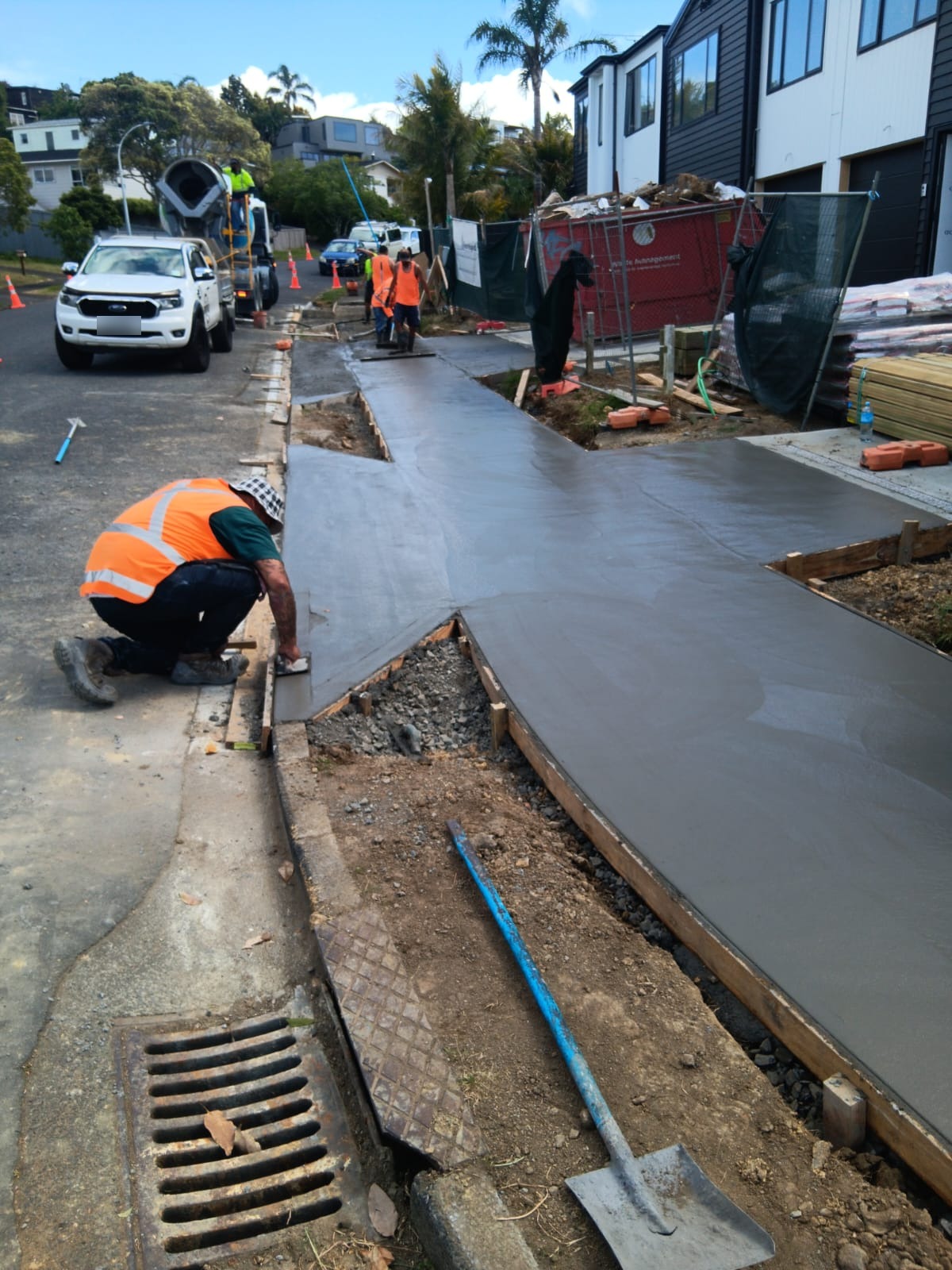
A vehicle crossing is the part of your driveway between the road and your property boundary. It usually runs across the footpath and grass berm. Because it sits on the road reserve, not your own land, you need written approval before you build a new crossing or change an existing one, and work can't start until that approval arrives.
What's included in the price
| Cost | Who sets it | Amount |
|---|
| Building the crossing (standard residential) | GigaCivil | From $4,000 + GST |
| Vehicle crossing application fee | Auckland Transport / Auckland Council | $546 incl. GST (fixed, from 1 July 2026) |
| Resource consent (only if your site needs one) | Auckland Council | Varies – separate council process and fee |
The $546 application fee covers processing and three inspections: pre-approval, pre-pour and final. AT says the fee is non-refundable and no additional charges are applied. Auckland Council emails you the invoice once it has reviewed the application.
What changes the price of a vehicle crossing?
Every site is different. These are the main things that move the price up or down:
- Width and size. A wider crossing, or a deep berm between the kerb and your boundary, means more area to dig out and pour.
- Material and finish. Plain broom-finished concrete, asphalt or exposed aggregate all cost differently. AT also expects the crossing to match the surrounding footpath, so the material isn't always a free choice. Your approval letter sets the specification.
- Removing the old crossing. Breaking out and taking away an existing crossing or old concrete adds time and disposal cost.
- Kerb and channel. If the kerb and channel need to be cut down or replaced, and the road edge next to it reinstated, that adds to the job.
- Berm slope and levels. A steep berm, or a big level difference between the road and your boundary, can mean more digging, more base material and more careful shaping to stay within AT's grade limits.
- Drainage. Some sites need extra work to manage stormwater, such as a channel, a culvert on rural roads, or moving water away from the crossing.
- Services and street furniture. Nearby power poles, pits, manholes, streetlights, hydrants or street trees can affect the design. Some may need the asset owner's or council's approval, or relocation.
- Traffic management. Every crossing needs a temporary traffic and pedestrian management plan. A busy road, a bus route or a narrow footpath means a bigger traffic management setup.
- Residential or commercial. Commercial crossings are built to a heavier AT standard (thicker, reinforced concrete) and cost more.
The process and timeline
- Free site visit and quote. We look at your boundary, the berm, kerb, levels, trees, poles and pits, and tell you whether a resource consent might be needed.
- Resource consent first, if needed. AT says you need resource consent from Auckland Council if the crossing will be wider than 3 metres at the boundary, if there are trees within 3 metres, or if you're building a new house and there isn't a suitable existing crossing.
- We lodge the AT application for you. We prepare the scaled plan, the crossing diagram and site photos, and lodge the application through AT's Road Services portal.
- You pay the $546 fee. Auckland Council reviews the application and emails the invoice.
- Pre-approval inspection and approval letter. An AT road corridor inspector visits the site. AT aims to deliver the consent letter within 20 working days, including processing time at both Auckland Council and AT. A resource consent or a complex site can take longer.
- Traffic management. AT may ask for a traffic management plan before work starts. Our in-house traffic management team prepares the plan and sets up the site. Where a Corridor Access Request is needed, AT says to apply at least 15 working days before work starts.
- Build, with two inspections. We excavate and box the crossing, then book the pre-pour inspection (AT needs 2 working days' notice). Once it passes, AT requires the crossing to be poured within 7 days. Then we tidy up and book the final inspection.
- Certificate of completion. When the final inspection passes, you get a certificate of completion by email and a copy goes on your Auckland Council property file.
Important: don't start any digging in the berm or footpath until the approval letter arrives.
Who pays for a vehicle crossing?
AT's rules say the property owner pays to build and maintain the vehicle crossing that serves their property, and pays the application fee and any resource consent fees.
Why choose GigaCivil?
- We lodge the AT application for you and deal with Auckland Council and Auckland Transport, so you don't have to.
- We do the work ourselves – our own crew builds the crossing and our own traffic management team sets up the site.
- More than 10 years of civil works and traffic management across Auckland.
- Free quotes and site visits, anywhere in Auckland.
- Available 24/7.
Want the driveway done at the same time? See our vehicle crossings and driveway construction pages.
Vehicle crossing cost FAQs
How much does a vehicle crossing cost in Auckland?
A standard residential vehicle crossing built by GigaCivil starts from $4,000 + GST, plus the fixed $546 (incl. GST) application fee from 1 July 2026. Wider, commercial or more complex sites cost more. We'll give you an exact price after a free site visit.
How much is the AT vehicle crossing application fee?
It's a fixed $546 including GST, effective from 1 July 2026. It covers processing and three inspections (pre-approval, pre-pour and final) and is non-refundable. It doesn't include building the crossing.
How long does it take to get a vehicle crossing approved?
AT aims to deliver the consent letter within 20 working days, including processing time at both Auckland Council and AT. If your crossing needs a resource consent, allow extra time for that first.
Do I need a resource consent for my vehicle crossing?
Only in some cases. AT says you need one if the crossing will be wider than 3 metres at the boundary, if there are trees within 3 metres, or if you're building a new house without a suitable existing crossing. We'll check this on the site visit.
Who pays for a vehicle crossing in Auckland?
The property owner pays to build and maintain the crossing that serves their property, and pays the application fee and any resource consent fees.
Can GigaCivil apply to Auckland Transport for me?
Yes. We prepare the plans and photos, lodge the vehicle crossing application for you, handle the traffic management, build the crossing and book the inspections.
Can I start work before the approval comes through?
No. AT says work must not start until you receive the written approval letter.
Get a free vehicle crossing quote
Tell us your address and what you need, and we'll arrange a free site visit and quote. We're available 24/7.
Call 021 113 0805 · Email works@gigacivil.co.nz · Send us a message
Fees and rules are set by Auckland Transport and Auckland Council and can change. Official details: at.govt.nz vehicle crossing application. Checked November 2026.